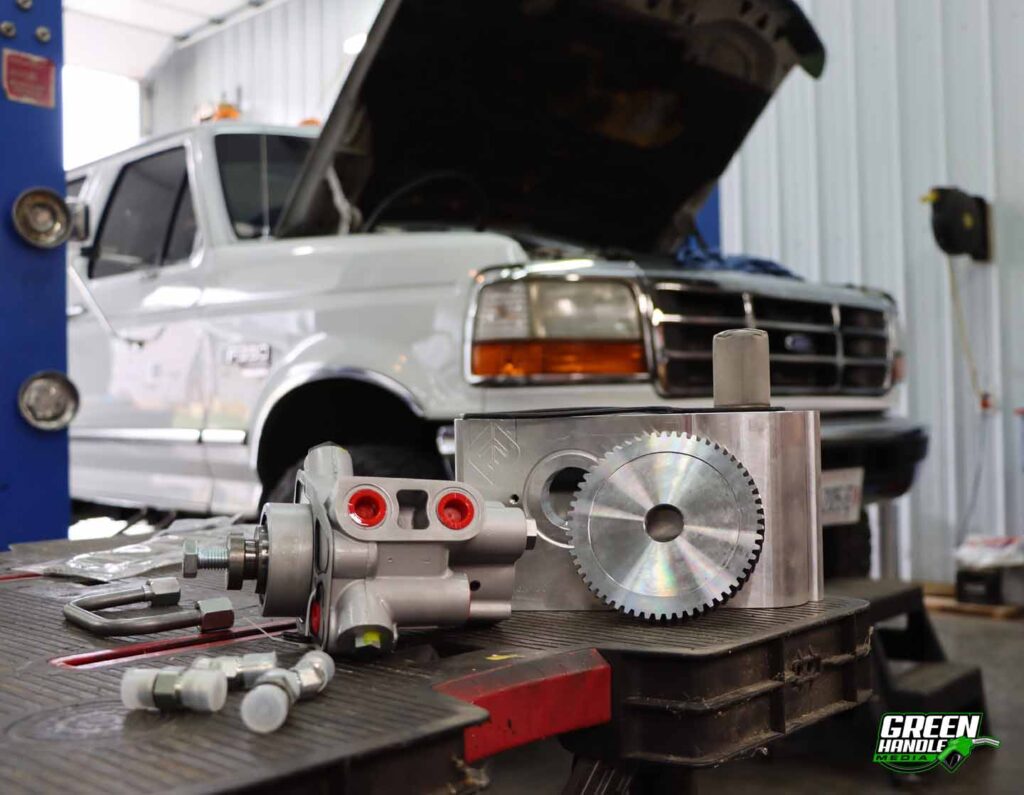
Full Force Diesel’s dual HPOP system is the end-all, be-all high-pressure oil solution for your ’94.5-‘03 Ford.
In the world of 7.3L Power Stroke performance, injection control pressure (ICP) is everything. An inability to maintain adequate ICP (i.e. high-pressure oil) means in-cylinder atomization, drivability, and horsepower all suffer. Unfortunately, larger HEUI injectors inevitably require more oil volume to actuate them, and there are very few single high-pressure oil pump options that can supply the kind of oil volume required to get the most horsepower out of a large set of 7.3L injectors. To solve the problem—and similar to what you see in the world of performance common-rail systems—a second high-pressure pump can be brought into the equation.
Years ago, Full Force Diesel acquired the renowned dual high-pressure oil pump system originally developed by Brian’s Truck Shop (BTS). Since then, Full Force has added its own unique touches to this legendary kit, and you can find it bolted to some of the most powerful 7.3L Power Strokes in existence. But aside from being able to support the largest performance HEUI injectors on the planet, Full Force’s dual HPOP system can benefit every 7.3L. From the stock injector work truck to the daily-driven, weekend warrior sporting small hybrids, to the drag truck running 450/400s, it’s the ultimate high-pressure oil upgrade for your ’94.5-’03 Power Stroke.
The Case For Dual HPOPs
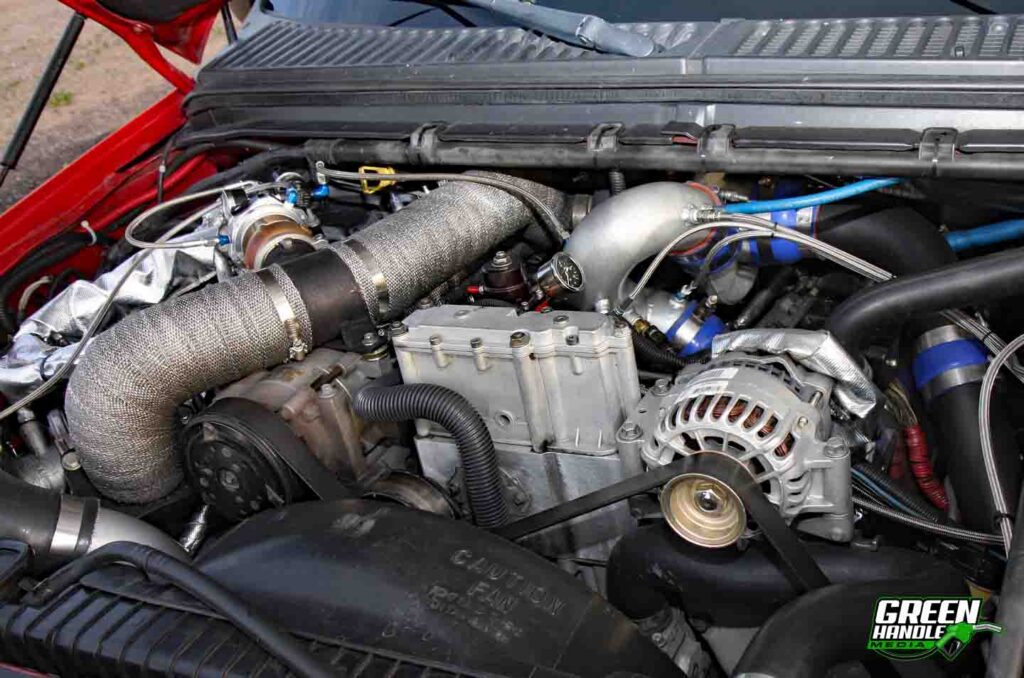
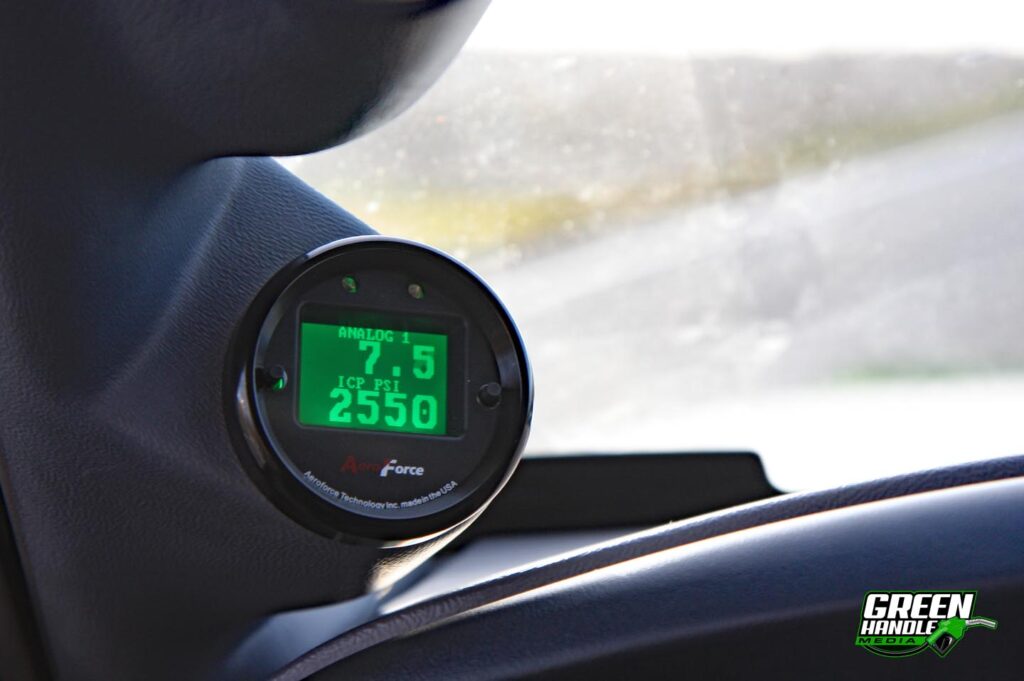
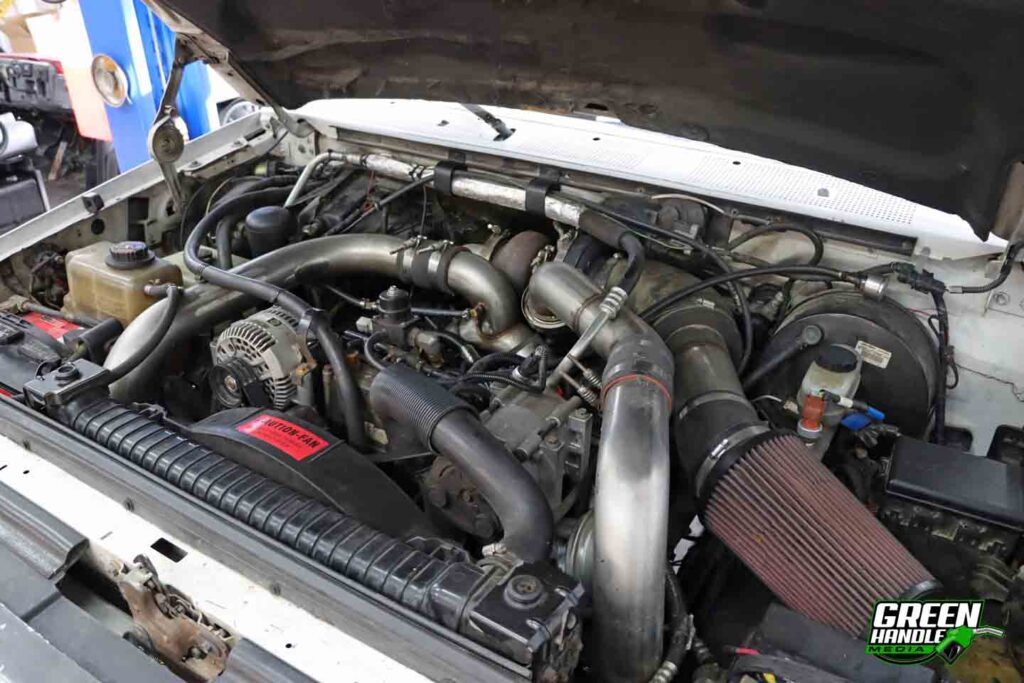
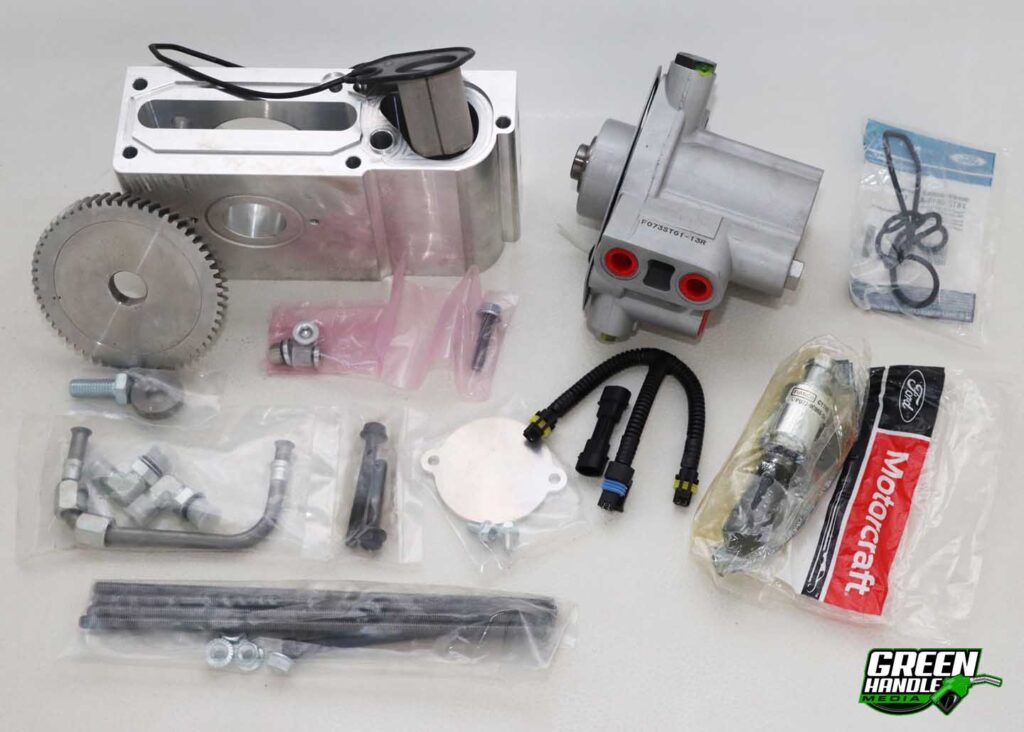
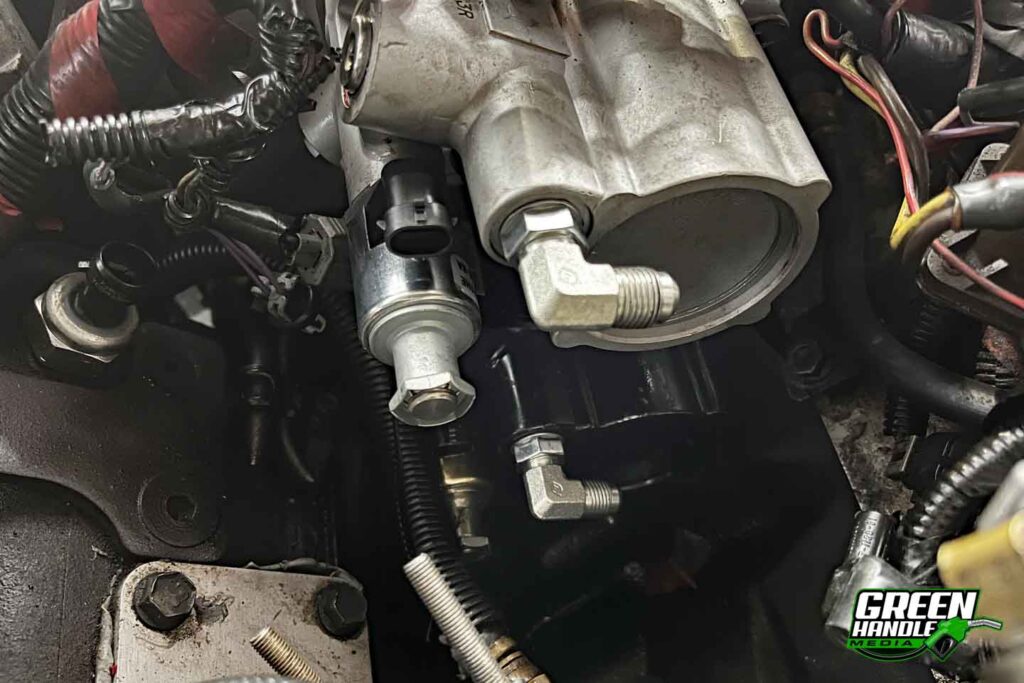
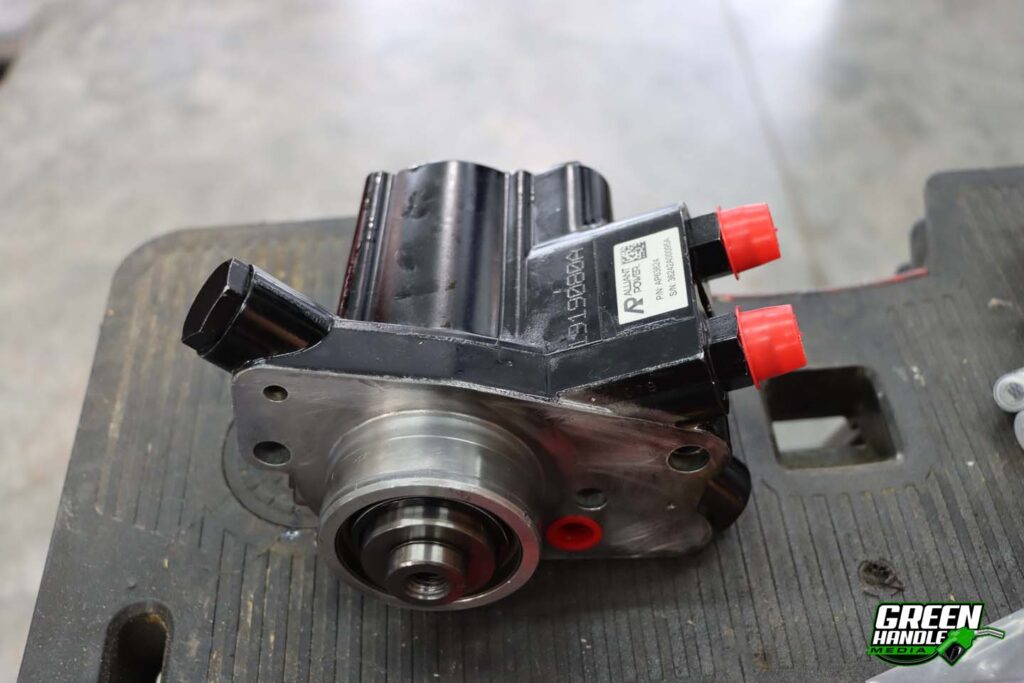
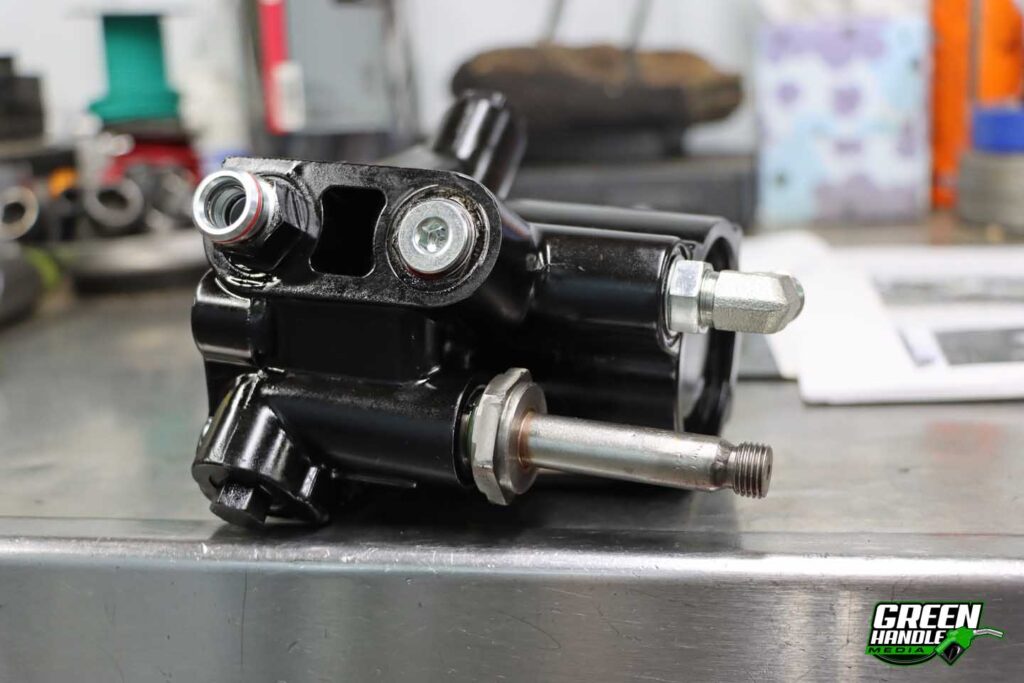
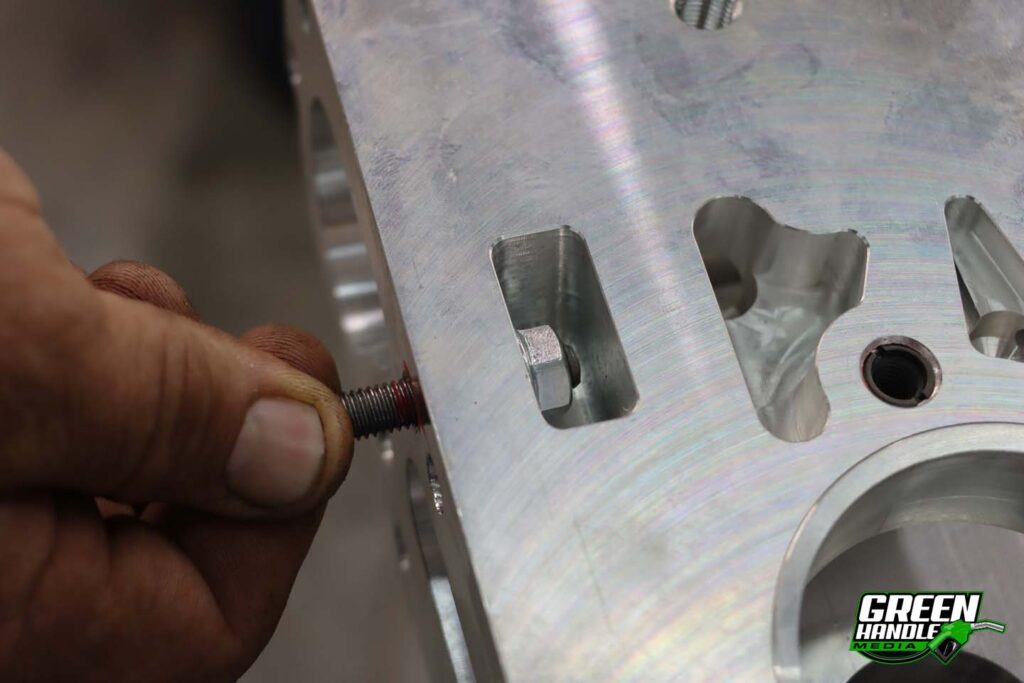
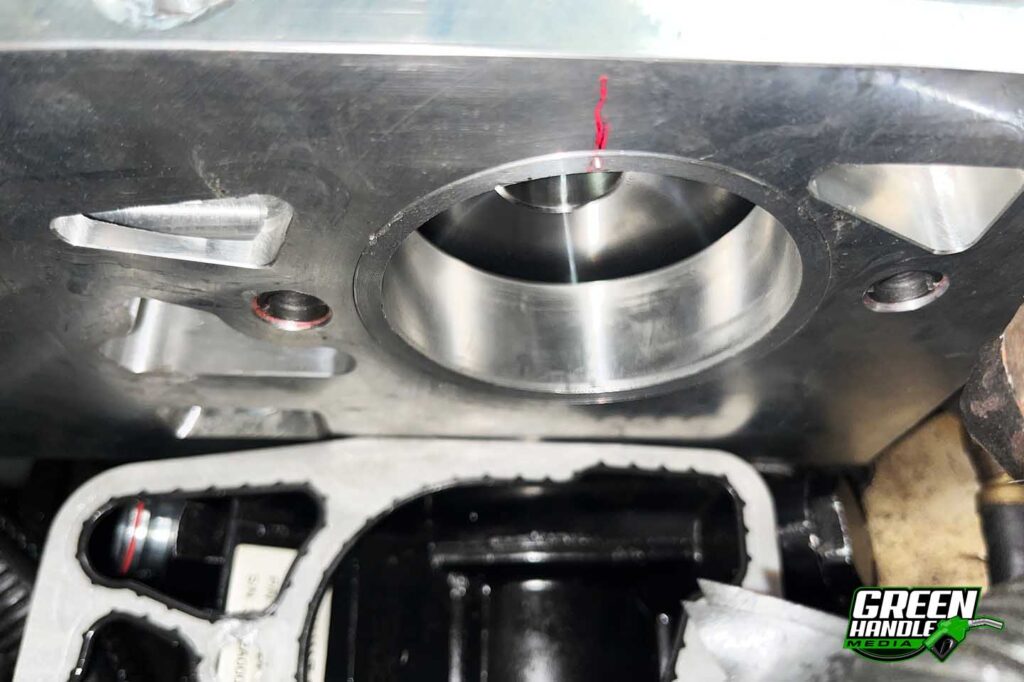
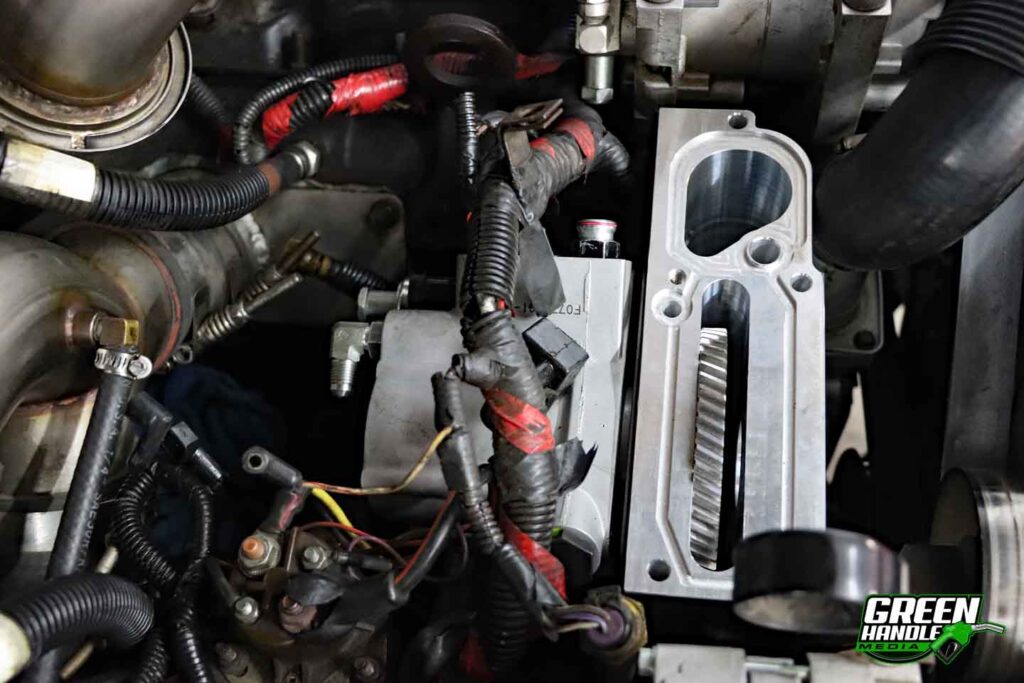
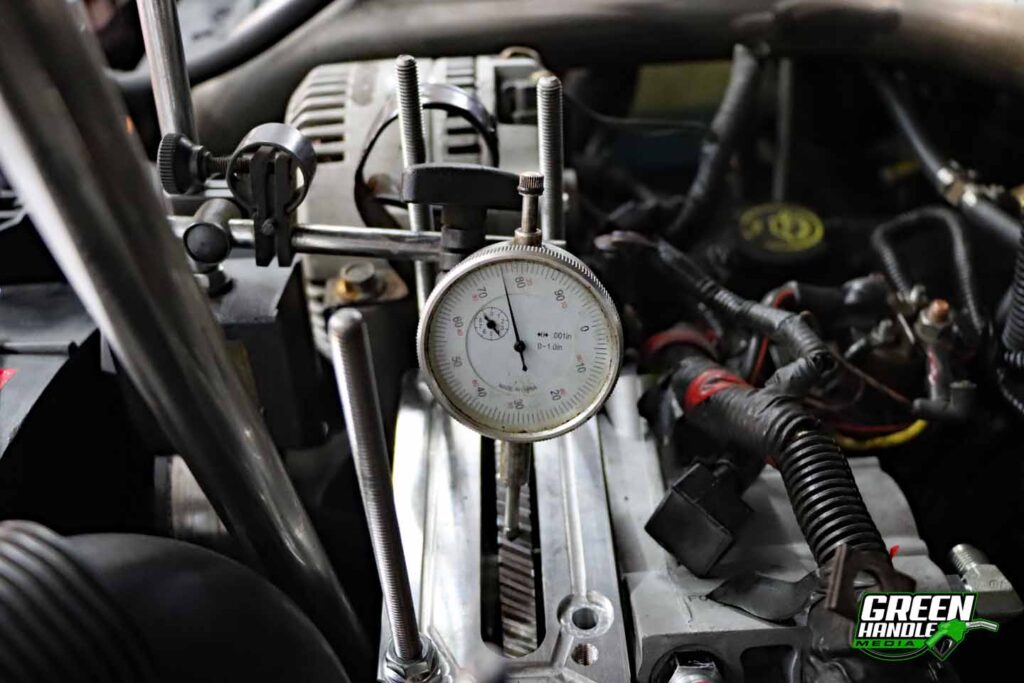
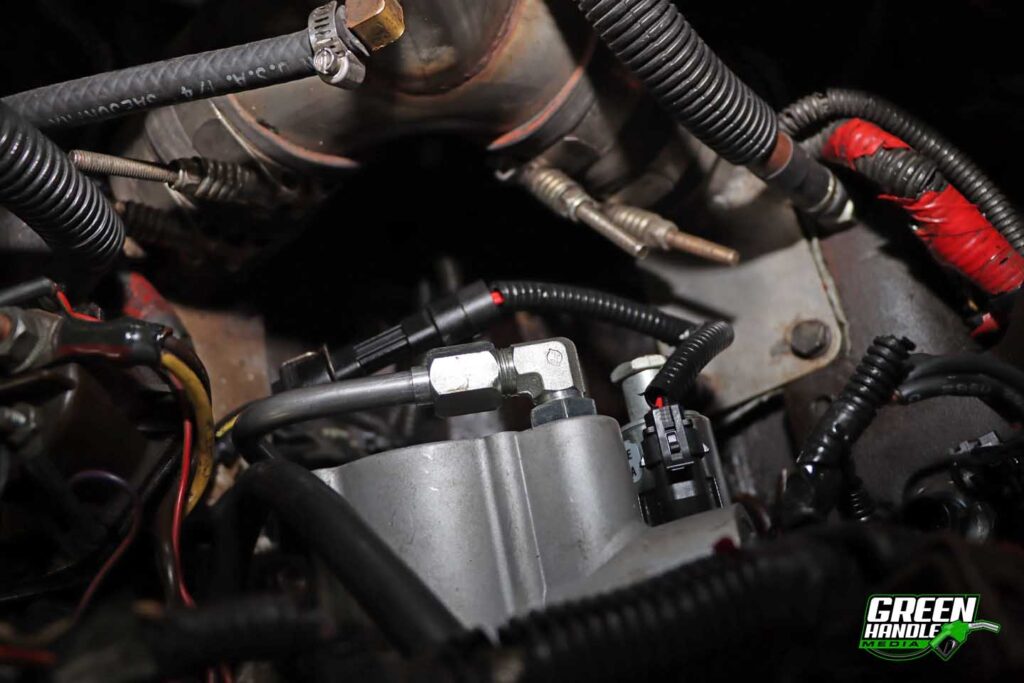
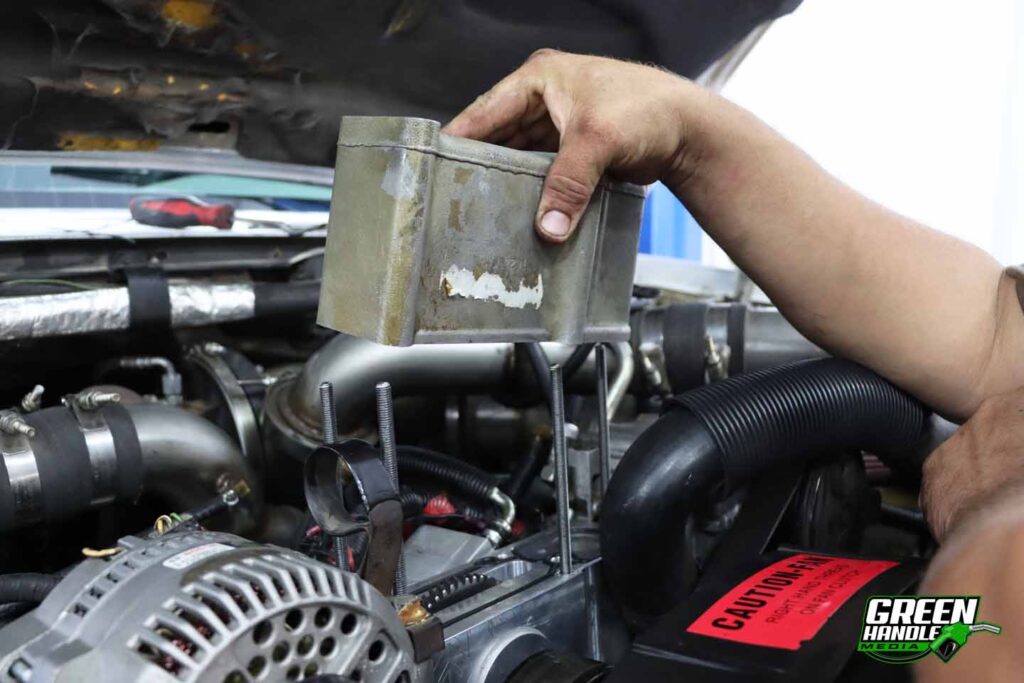
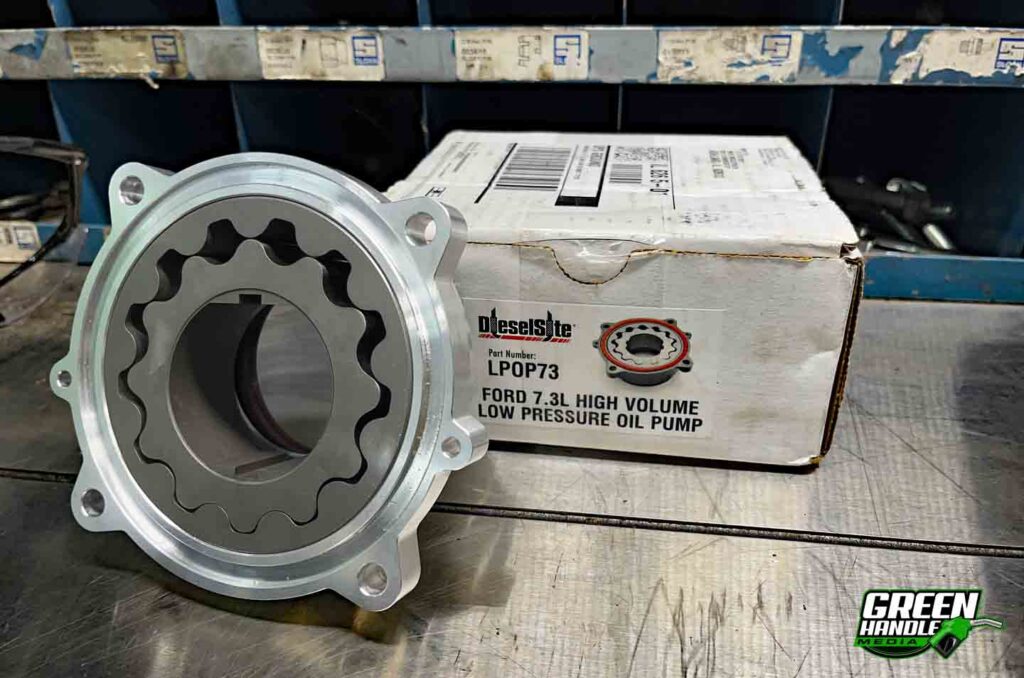
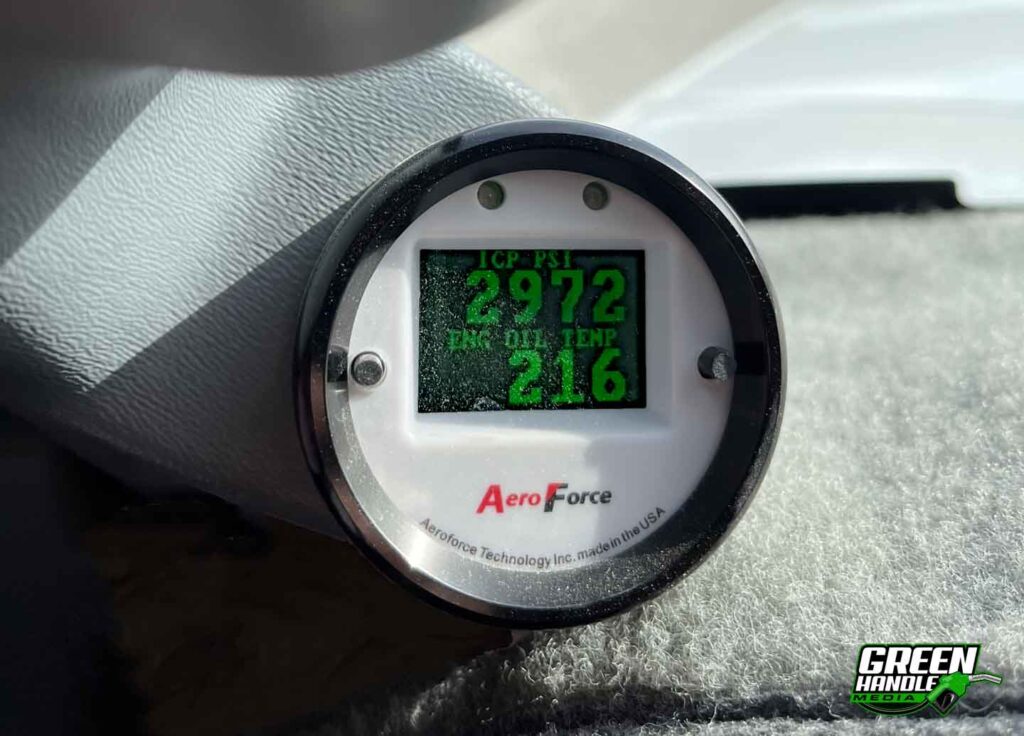
If ever there was a truck in need of dual high-pressure oil pumps, it would be this one: a ’97 F-350 sporting a set of 350cc hybrid injectors equipped with 200-percent over nozzles from Unlimited Diesel Performance. Because the 350/200s were relying on a single high-pressure oil pump to actuate them—an old-school SRP1.1 from the late Stealth Performance—the full potential of the big hybrids could never be realized. In fact, on a tuning file commanding just 2.9 milliseconds of injector pulse width (i.e. duration, or injector on-time), the SRP1.1 was on the edge of what it could support. Above, you’re looking at the window of time when the engine has just been placed under load (with the transmission in Overdrive) and before boost flashed from 7-psi to 35+ psi. To get the most out of the 350/200s, that 2,550 psi ICP number should be at least 3,000 psi…Here you can see some of the truck’s other upgrades. The full mod list reads like this: Fleece Performance Engineering billet S468 (68/87/1.0), Irate Diesel T-4 mount, Spearco intercooler, ARP head studs, Comp Cams 910 valvesprings, Hamilton Cams chromoly pushrods, John Wood Street Performance E4OD, and an Irate competition fuel system with regulated return. Note: Full Force Diesel’s dual HPOP system won’t work in conjunction with the factory fuel bowl in place in the valley. You must run an aftermarket fuel system with the fuel bowl deleted. Beyond that, you may also have to tweak some of the fuel lines in your E-fuel system to accommodate the duals.The FFD Dual HPOP kit ships with everything you need to install a second pump above your existing one at the front of the lifter valley. At the heart of the system is a new, reverse rotation high-pressure oil pump, along with the HPOP gear required to drive it. Other supporting components include a billet dual HPOP adapter block, dual HPOP reservoir screened gasket, steel HPOP balance tube, Motorcraft injection pressure regulator (IPR)(PN F81Z-9C968-AB), and a dual pigtail for the IPR. You also get a gear inspection cover (with new bolts), and the 90-degree fittings, pipe plug and fasteners required to install everything.It’s important to mention why Full Force Diesel’s Dual HPOP system utilizes two IPR’s. The IPR is the vital dump valve that controls the outlet pressure of the high-pressure oil pump (in a range of roughly 500 to 3,000 psi). By running an IPR in both pumps (and utilizing the dual pigtail for the IPR mentioned above), the dual arrangement effectively acts as a single pump system. Dual IPR’s enable optimum control of oil flow and allow the HPOP’s to dump twice the oil volume more quickly than other twin HPOP systems on the market—not to mention the fact that they provide for smooth, factory-like idle (nothing choppy or rough).Wanting to start over with two fresh high-pressure oil pumps, we sourced a second HPOP, this one to reside in the factory location. A reman unit from Alliant Power, Alliant having one of the best names in new and remanufactured parts for the 7.3L Power Stroke, it was purchased through our friends at Jelibuilt Performance. Carrying PN AP63624, it’s a direct replacement pump for ’96-’03 model year engines (’94-’95 engines, which feature an oil drain check valve, will require PN AP63621). It’s our presumption that this HPOP has the more desirable, 17-degree swash plate angle (vs. 15-degree on ’94.5-early ’99 engines). For reference, the swash plate angle determines the stroke of the 7 pistons within the pump. The longer the stroke, the more displacement/volume the pump has.Readying the factory location Alliant HPOP, its fitting and spring were removed from the outlet port on the right and replaced with the supplied 9/16-inch O-ringed pipe plug. Only the remaining STC outlet fitting will be used. After that, one of the included 90-degree fittings was installed on the back side of the pump, in place of the factory plug, and oriented toward the passenger side of the engine. The supplied steel branch tube connects to this 90-degree fitting. The included (top) HPOP will also be configured in this manner. We’ll note that, in addition to going with a new HPOP in the factory location, we installed a second new IPR (shown).With the bottom HPOP in place (including a new HPOP gasket), we turned to Full Force Diesel’s detailed, 15-page instruction manual for the remainder of the install. Predictably, several crucial steps revolve around the installation of the top pump, which includes the supplied dual pump adapter block. Here, a stud and nut are installed in the adapter block’s alignment hole in order to mark exactly how deep the mounting stud (for the front cover) needs to be. In addition to the alignment hole, the billet-aluminum adapter block includes a port to accommodate the factory oil pressure sensor.One of the most crucial parts of the install boils down to the top HPOP eccentric ring being set correctly. First, with the eccentric ring in place within the adapter block and the adapter block installed (along with the first mounting stud tightened via its nut), the eccentric ring’s indexing mark gets positioned between 12 o’clock and 1 o’clock. This is vital because, later in the install, backlash must be set for the top HPOP drive gear. Once proper backlash is established, the top pump is removed and the eccentric ring is marked, removed and coated in RTV, and then reinstalled in the adapter block.The top HPOP drive gear goes in next, initially set loosely in place within the adapter block. Then comes the pump, which has its fittings (and plug) configured the same way the bottom HPOP is, and that gets installed using the supplied steel HPOP gasket. Like the pump below it, the HPOP mounting bolts are torqued to the factory spec of 18 ft-lbs. After making sure the drive gear is fully seated on the HPOP, the drive gear bolt (with washer) is torqued to 95 ft-lbs.Setting the backlash on the top HPOP drive gear calls for a dial indicator. But before grabbing a reading, the factory bolts were installed in the adapter block and tightened to 12 ft-lb. With everything in a torqued state, this allows you to obtain a more accurate backlash reading. Per Full Force Diesel’s instructions, we took our dial indicator readings with the lower HPOP drive gear bolt loaded using a ½-inch breaker bar. FFD states backlash should be no less than 0.008-inch and no more than 0.013-inch.Once proper backlash was established, the top pump was removed and the eccentric was secured in the adapter block (in the manner previously mentioned, using RTV) and the pump was reinstalled. From there, the balance tube was connected to the 90-degree fittings on the rear of each HPOP and the high-pressure oil lines were installed and routed from the cylinder heads to each front outlet port on the pumps. It does not matter which HPOP feeds which head. Next, the dual pigtail for the IPR’s was integrated with the existing harness (shown) and the factory oil pressure sensor was relocated to the back of the adapter block.Finishing up the install, the supplied screened gasket was placed in the groove present in the adapter block and the factory HPOP reservoir housing was installed (its oil pressure sensor port having been filled with the supplied 7/16-inch O-ringed pipe plug). As for the drive gear inspection cover, we installed the one supplied from Full Force Diesel up top (for better aesthetics) and installed the OEM cover on the bottom unit. For an optimum seal, both drive gear covers were hit with a bead of RTV before being torqued in place.Remember, the 7.3L’s high-pressure oil pump is supplied oil from the low-pressure oil pump, and with dual HPOP’s comes more oil demand from the LPOP. To guarantee we had more than adequate low-pressure oil on tap for the dual HPOP’s at all times, we reached out to DieselSite for one of its high volume low-pressure oil pumps. To our surprise (and benefit), DieselSite owner, Bob Riley, had just put the final touches on several updates within this high volume pump—updates that make it both more durable and efficient. With this LPOP in the mix, a 7.3L’s low-pressure oil supply typically jumps from 40 psi (stock LPOP) to 50-55 psi at idle when cold, and from 20 psi to 30-35 psi when warm. The trend continues across the board, with the DieselSite LPOP providing more oil pressure at high idle, cruising, free-revving, and at wide-open throttle.Post install, all connection points were checked (some using a telescopic mirror), wiring was secured in a manner that would prevent rubbing or chafing, and the engine was started. Not unlike a standard HPOP replacement, any time air infiltrates the 7.3L’s HEUI system hard starts and rough idle are par for the course for 50 to 100 miles. By the 100-mile mark, and after some spirited driving, all air had been purged from the system. As you can see here, even at half throttle while accelerating to merge onto the Interstate, an abundance of high-pressure oil is already on tap. This type of half-throttle performance explains why the truck feels so much more responsive, especially at low and mid-range rpm.Following a few tuning tweaks to glean the most performance out of the dual HPOP’s, this OBS Ford will be making a trip to the rollers in the months ahead. Its custom PCM calibrations will be created by Jelibuilt Performance and Gearhead Tuning using Power Hungry Performance Minotaur software, and each custom file will be available on-the-fly thanks to a PHP Hydra Chip. We’ll keep you posted on the numbers it lays down on the chassis dyno—numbers we think will top 600 hp and 1,200 lb-ft of torque.
Dual HPOPs Aren’t Solely Reserved For Trucks Running Big Injectors
Full Force Diesel’s Dual HPOP system works with any size injector and will maximize injector performance for any 7.3L-powered truck on the planet: ’94.5-’97 OBS, early ’99, and ’99.5-’03. Work horse, tow rig, daily driver, or race truck.
Its kit allows room for growth in the future, should you decide to go from a mild set of injectors (or stock injectors) to big hybrids.
Regardless of injector size, your truck will pull stronger at light to moderate acceleration—and it will be especially noticeable in manual transmission applications, where having more consistent high pressure oil volume on tap will increase throttle response and also decrease boost loss between up-shifts.
On top of optimizing horsepower potential at high rpm (again, whether you’re running stock injectors or big hybrids), having more consistent high-pressure oil on tap will improve (and sustain) low rpm torque production.
Budget-friendly performance: Full Force Diesel’s Dual HPOP system costs less than a set of 600hp-capable hybrid injectors.
Pro Tip: Always Time-Sert or HeliCoil the front cover (ask us how we know!) for the bottom HPOP mounting bolts. Don’t find out the hard way. The threads in your 7.3L’s cast-aluminum front cover are at least 23 years old…